



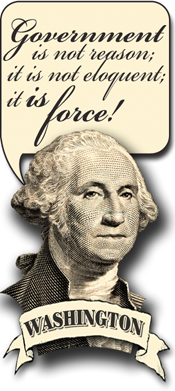














All I can say is, what the hell is wrong with people!?!
A worker died after being trampled and a woman miscarried when hundreds of shoppers smashed through the doors of a Long Island Wal-Mart Friday morning, witnesses said.
The unidentified worker, employed as an overnight stock clerk, tried to hold back the unruly crowds just after the Valley Stream store opened at 5 a.m.
Witnesses said the surging throngs of shoppers knocked the man down. He fell and was stepped on. As he gasped for air, shoppers ran over and around him.
“He was bum-rushed by 200 people,” said Jimmy Overby, 43, a co-worker. “They took the doors off the hinges. He was trampled and killed in front of me. They took me down too…I literally had to fight people off my back.”
…Before police shut down the store, eager shoppers streamed past emergency crews as they worked furiously to save the store clerk’s life.
“They were working on him, but you could see he was dead, said Halcyon Alexander, 29. “People were still coming through.”
Only a few stopped.
“They’re savages,” said shopper Kimberly Cribbs, 27. “It’s sad. It’s terrible.” [read more]
For what!? 20% off a Wii?!
I hope every one of them is tracked down and charged with manslaughter.
(ht Michelle Malkin)

I am thankful for the health and well-being of my family and loved ones.
I am thankful that I am alive, happy, and retain all my necessary organs and appendages.
I am thankful that I am blessed to live in the United States of America — truly the greatest nation on Earth — where we still remain free.
I am thankful for the Pilgrims, the colonists, our founding fathers, and thankful that I know liberal revisionist history is codswollop.
I am thankful that my Congressman, Dave Reichert, won, and that Al Franken may yet fail to steal a senate seat in Minnesota.
I am thankful that I am blessed with everything I need: food, drink, warmth, heat, light, clothing and healthcare, and many comforts above and beyond that which I require.
I am deeply thankful for my neighbors; good people and good friends who are facing very difficult times.
I am thankful for our armed forces who keep us safe at great peril and sacrifice. And I am so thankful and happy that they have prevailed and won the war in Iraq, and achieved great victories in Afghanistan.
It is highly out of fashion at present, but I am still very thankful for President Bush and Vice-President Cheney.
I am thankful for the wisdom I gain every day from others.
I am thankful for all of our readers.
I am thankful for fresh apple cider, thick socks and down pillows.
I am thankful that I have more blessings than I can count here.
And I am thankful that there is a God in Heaven who loves us, and has blessed each and every one of us, no matter our circumstances, which we would all realize if only we would take the time to be thankful.
Happy Thanksgiving!
Filed under: Education, History | Tags: First National Thanksgiving, Native Americans, Thanksgiving, Wampanoag
On March 22, 1621, an official Native American delegation walked through what is now southern New England to negotiate with a group of foreigners who had taken over a recently deserted Indian settlement. At the head of the party was an uneasy triumvirate: Massasoit, the sachem (political-military leader) of the Wampanoag confederation, a loose coalition of several dozen villages that controlled most of southeastern Massachusetts; Samoset, sachem of an allied group to the north; and Tisquantum, a distrusted captive, whom Massasoit had reluctantly brought along as an interpreter.
Massasoit was an adroit politician, but the dilemma he faced would have tested Machiavelli. About five years before, most of his subjects had fallen before a terrible calamity. Whole villages had been depopulated—indeed, the foreigners ahead now occupied one of the empty sites. It was all he could do to hold together the remnants of his people. Adding to his problems, the disaster had not touched the Wampanoag’s longtime enemies, the Narragansett alliance to the west. Soon, Massasoit feared, they would take advantage of the Wampanoag’s weakness and overrun them.
Desperate threats require desperate countermeasures. In a gamble, Massasoit intended to abandon, even reverse, a long-standing policy. Europeans had been visiting New England for at least a century. Shorter than the natives, oddly dressed, and often unbearably dirty, the pallid foreigners had peculiar blue eyes that peeped out of the masks of bristly, animal-like hair that encased their faces. They were irritatingly garrulous, prone to fits of chicanery, and often surprisingly incompetent at what seemed to Indians like basic tasks. But they also made useful and beautiful goods—copper kettles, glittering colored glass, and steel knives and hatchets—unlike anything else in New England. Moreover, they would exchange these valuable items for cheap furs of the sort used by Indians as blankets. It was like happening upon a dingy kiosk that would swap fancy electronic goods for customers’ used socks—almost anyone would be willing to overlook the shopkeeper’s peculiarities.
This is how author Charles C. Mann describes the first contact between the Pilgrims and the Native Americans, in his fascinating book 1491, which alters our view of the Americas before the arrival of the Europeans in 1492. He goes on to say: “British fishing vessels may have reached Newfoundland as early as the 1480s and areas to the south soon after. In 1501, just nine years after Columbus’s first voyage, the Portugese adventurer Gaspar Corte-Real abducted fifty-odd Indians from Maine. Examining the captives, Corte-Real found to his astonishment that two were wearing items from Venice: a broken sword and two silver rings.”
As for the Indians, evidence suggests that they tended to view Europeans with disdain as soon as they got to know them. The Huron in Ontario, a chagrined missionary reported, thought the French possessed “little intelligence in comparison to themselves.” Europeans, Indians told other Indians, were physically weak, sexually untrustworthy, atrociously ugly, and just plain smelly. (the British and French, many of whom had not taken a bath in their entire lives, were amazed by the Indian interest in personal cleanliness.)…The Micmac in New Brunswick and Nova Scotia scoffed at the notion of European superiority. If Christian civilization was so wonderful, why were its inhabitants all trying to settle somewhere else?
The Wall Street Journal has two editorials that it has been publishing on this day ever since 1961 : “The Desolate Wilderness”, and “And the Fair Land.” This year they have another piece by Ira Stoll on the first national Thanksgiving holiday, “A Day of Thanksgiving”, on Thursday, Dec. 18, 1777. You will want to read all three.
We wish you and yours a most Happy Thanksgiving. We all have much to be thankful for.

Pumpkin and Pecan, not Obama or Biden. Unfortunately, there were no poults being beheaded in the background.
I know it’s dorky, but I love these little traditions. I have to wonder though; had Benjamin Franklin had his way, and the turkey were our national bird, would we all be eating bald eagle tomorrow?
Filed under: News the Media Doesn't Want You to Hear, Politics, The Constitution


I’m so glad FOX News ran this story; Lord knows, nobody else will.
Ever since the first placard popped up at Obama’s first post-election press conference (actually, his first press conference in months), my brow knits and nostrils flare at the very mention of the phrase, “Office of the President-Elect.” Not because I dislike and distrust Obama, I do, but because, you see, there is no such thing. It doesn’t exist.
Obama isn’t even the President-Elect, it is a title given out of courtesy. He does not become the President-Elect until he is elected, and that doesn’t occur until the electoral college meets next month, casts its votes, and the results are certified by the Vice President. But I quibble. The point is, even if he were the President-Elect, given that he has resigned his senate seat, he holds NO office until January 20th at precisely 12:00:01.
Now, I have no problem calling him president-elect, I’m only illustrating a point, but what does bother me a great deal is the man’s pathological need to assume the airs of power and authority that do not belong to him. The same neurosis undoubtedly responsible for his pattern of seeking higher office before he has even warmed the seat of the one he occupies.
Everyone knows that this isn’t his first phony presidential placard — Obama finally went too far and earned national ridicule for his self-styled “presidential seal.” Before that, there was “O-Force One”, candidate Obama’s campaign plane, complete with executive chair emblazoned with the words, “The President”. There was his speech in Germany which was bad enough as it was, made that much worse by how very badly he wanted to speak from the Brandenberg Gates. There were his Corinthian columns. Long before any of which, he was already speaking from behind presidential placards in rooms rented for their resemblance to the East Room of the White House.
These are the signs of a man very hungry for power. These are the signs of impatience. These are red flags.

Filed under: Foreign Policy, Military, News, News the Media Doesn't Want You to Hear, Terrorism | Tags: Fighting in Afghanistan, Thanks to the Marines, United States Marines
Michael Ledeen posts a stirring account of Marines fighting in Afghanistan, at the Corner.
Marine Makes Insurgents Pay the Price November 18, 2008 Marine Corps News
by Cpl. James M. MercureFARAH PROVINCE, Afghanistan – In the city of Shewan, approximately 250 insurgents ambushed 30 Marines and paid a heavy price for it.
Shewan has historically been a safe haven for insurgents, who used to plan and stage attacks against Coalition Forces in the Bala Baluk district.
The city is home to several major insurgent leaders. Reports indicate that more than 250 full time fighters reside in the city and in the surrounding villages.
Shewan had been a thorn in the side of Task Force 2d Battalion, 7th Marine Regiment, Special Purpose Marine Air Ground Task Force Afghanistan throughout the Marines’ deployment here in support of Operation Enduring Freedom, because it controls an important supply route into the Bala Baluk district. Opening the route was key to continuing combat operations in the area.
“The day started out with a 10-kilometer patrol with elements mounted and dismounted, so by the time we got to Shewan, we were pretty beat,” said a designated marksman who requested to remain unidentified. “Our vehicles came under a barrage of enemy RPGs (rocket propelled grenades) and machine gun fire. One of our ‘humvees’ was disabled from RPG fire, and the Marines inside dismounted and laid down suppression fire so they could evacuate a Marine who was knocked unconscious from the blast.”
The vicious attack that left the humvee destroyed and several of the Marines pinned down in the kill zone sparked an intense eight-hour battle as the platoon desperately fought to recover their comrades. After recovering the Marines trapped in the kill zone, another platoon sergeant personally led numerous attacks on enemy fortified positions while the platoon fought house to house and trench to trench in order to clear through the enemy ambush site.
“The biggest thing to take from that day is what Marines can accomplish when they’re given the opportunity to fight,” the sniper said. “A small group of Marines met a numerically superior force and embarrassed them in their own backyard. The insurgents told the townspeople that they were stronger than the Americans, and that day we showed them they were wrong.”
During the battle, the designated marksman single handedly thwarted a company-sized enemy RPG and machinegun ambush by reportedly killing 20 enemy fighters with his devastatingly accurate precision fire. He selflessly exposed himself time and again to intense enemy fire during a critical point in the eight-hour battle for Shewan in order to kill any enemy combatants who attempted to engage or maneuver on the Marines in the kill zone. What made his actions even more impressive was the fact that he didn’t miss any shots, despite the enemies’ rounds impacting within a foot of his fighting position.
“I was in my own little world,” the young corporal said. “I wasn’t even aware of a lot of the rounds impacting near my position, because I was concentrating so hard on making sure my rounds were on target.”
After calling for close-air support, the small group of Marines pushed forward and broke the enemies’ spirit as many of them dropped their weapons and fled the battlefield. At the end of the battle, the Marines had reduced an enemy stronghold, killed more than 50 insurgents and wounded several more.
“I didn’t realize how many bad guys there were until we had broken through the enemies’ lines and forced them to retreat. It was roughly 250 insurgents against 30 of us,” the corporal said. “It was a good day for the Marine Corps. We killed a lot of bad guys, and none of our guys were seriously injured.”
Filed under: Foreign Policy, History, Terrorism | Tags: Holodomor, Stalin's Russia, The Soviet Terror, Ukraine
Americans are celebrating Thanksgiving, but Ukrainians are remembering Holodomor, the horrific famine in 1932-1933 when the policies of Stalin led to the deliberate starvation of millions of Ukrainians at the rate of twenty-five thousand peasants per day. Can you conceive of that number?
The great historian of the Soviet Terror, Robert Conquest, has noted that this genocide had two terrible effects: over the next decade or so, more than ten million peasants died. At the same time, the Communists who oversaw the mass murder were brutalized into becoming bureaucrats for whom terror was an acceptable, normal method of carrying out “the revolution”. Chilling!
Michael Ledeen invites us to remember, and to put the blame where it belongs.
Filed under: Domestic Policy, Entertainment, Health Care | Tags: Good Hot Soup, Recipe, Thanksgiving
Thanksgiving week, and the mind turns to menus and food preparation. A soup added to a turkey dinner might be too much for many appetites, but I offer it up as accompaniment for the leftovers.
Butternut Squash Soup
2 1/2 lbs. butternut squash, peeled, seeded and cut into cubes
5 Cups chicken stock (1 large can+ 1 can condensed)
1 Cup chopped onions
3/4 Cup white part of scallions or chopped shallots
2 Cups light cream (half & half)
salt and pepper to taste (use white pepper)
In a large kettle combine squash, chicken stock, onion and scallion or shallots. Simmer until squash is tender. Pureé mixture in small batches in a blender. Add cream, reheat but do not boil. Thicken slightly with cornstarch dissolved in water. Serve, garnished with finely chopped green part of scallions or with chopped chives.
Filed under: History, Iraq, Military, Terrorism | Tags: Iraqi Democracy, U.S. Military, War in Iraq, Winning In Iraq
That’s what Michael Yon reports today in the New York Post. Michael Yon has been reporting on the War on Terror since December 2004 at Michaelyon-online.com. His latest book is Moment of Truth in Iraq , and I highly recommend it. The civil war, he says, is completely over. Muqtada al-Sadr has lost a lot of support among the Shia. Many view him as one whose influence derives solely from respect for his father.
The Iraqi Army continues to grow stronger and more professional by the month. Even the National Police, who last year were thought of as militia members in uniform and drew attacks, are slowly gaining acceptance and respect. U.S. soldiers’ mentoring is working, and bonds of trust are being built between U.S. and Iraqi soldiers, police and citizens. “The United States”, says Yon, “has a new ally in Iraq. And if both sides continue to nurture this bond, it will create a permanent partnership of mutual benefit.”
Iraqis are tired of war and ready to get back to school, to business and to living life as it should be.
Do read the whole short article. The media have lost interest in Iraq, and prefer to think of it, if they think of it at all, as Bush’s failed war. It is instead, a great Bush success. It’s hard now to remember what an awful situation Iraq was in 2003.
I remember the Iraqis voting for the first time. We all remember the purple fingers. U.S. soldiers guarding the Iraqis lined up to enter the polling place noted a very pregnant Iraqi woman in line. She went into labor while she waited in line, and a U.S. Medic came to her aid, delivered the baby, and the woman planted the baby in the soldier’s arms, and went in to vote.
Do not belittle Iraqi democracy. A people who endured the torture, the terror and brutality of a tyrant like Saddam Hussein could teach us a few things about the importance of the right to vote.
 American Elephants